Scholarships & cost
Swimming scholarships exist in NCAA Division I and II, the NAIA and U SPORTS, and nearly all of them are partial. Here is how each system sets its limits and how academic aid fits alongside athletic money.

Are there swimming scholarships? Yes. NCAA Division I and Division II schools, NAIA schools, and Canadian U SPORTS universities can all give athletic money to swimmers and divers. NCAA Division III schools cannot, though their swimmers often receive merit and need-based aid. Nearly every swimming scholarship is a partial award, so the families who come out ahead are the ones who pair athletic money with academic aid.
| Level | Athletic scholarships? | Team limit for swimming and diving | How the money is split |
|---|---|---|---|
| NCAA D1 (opted in to the House settlement) | Yes | Roster limit of 30 for men, 30 for women. No scholarship cap. | Any share of a scholarship to any rostered athlete |
| NCAA D1 (not opted in) | Yes | 9.9 scholarships (men), 14 (women) | Equivalency: split among swimmers |
| NCAA D2 | Yes | 8.1 scholarships (men), 8.1 (women) | Equivalency: split among swimmers |
| NCAA D3 | No | None | Merit and need-based aid only |
| NAIA | Yes | 8 full grant equivalencies per team | Equivalency, with exemptions for strong students |
| U SPORTS (Canada) | Yes | Set by each school | Capped at tuition and compulsory fees per athlete |
A headcount sport gives every scholarship athlete a full award, and each athlete counts as one. An equivalency sport has a pool worth a set number of full scholarships, and the coach can divide it any way they like: one swimmer on a full award, or 16 swimmers on half awards, or any mix in between.
Swimming and diving has always been an equivalency sport. Under the NCAA's post-settlement rules, every Division I sport now works this way, including at schools that did not opt in.
The math explains why most swim awards are partial. A Division II coach with 8.1 scholarships has to fund an entire team of men or women with that pool. A 40% award to a strong recruit is a normal, good offer.
The House v. NCAA settlement took effect July 1, 2025, and split Division I into two groups.
Every school in the ACC, Big Ten, Big 12, and SEC, plus any other Division I school that chose to opt in, replaced scholarship limits with roster limits. The limit for both men's and women's swimming and diving is 30 athletes. The coach may give athletic aid to any swimmer on that roster, in any amount, up to the full cost of attendance. On paper, a team could fund all 30 athletes.
In practice, the budget decides. The rules allow up to 30 funded athletes, and the athletic department decides how many it can pay for. Ask every Division I coach two questions: how many athletes will be on the roster, and how much scholarship money the team has this year.
Conferences can also set their own limits below the NCAA number. The SEC, for example, was reported to cap men's swimming and diving at 22. Check the number for each conference on your list.
Roster limits cut both ways. More swimmers can be funded, but a team of 30 has less room for walk-ons and developing swimmers than many programs carried before 2025.
These schools keep the 2024-25 scholarship limits: 9.9 for men's swimming and diving and 14 for women's. They do not have to follow the roster limits, so their teams can be larger. Opt-in status is decided year to year, so confirm it with each school you are considering.
Division II allows 8.1 scholarships for men's swimming and diving and 8.1 for women's, per the 2026-27 Division II Manual. Both are equivalency limits, so coaches split them across the roster.
Only athletics aid counts toward the 8.1. The NCAA defines athletics aid as money from the athletics department, or institutional aid that requires the student to compete. An academic scholarship the school awards to all qualifying students does not use up the team's pool, which is why Division II coaches pay close attention to your grades.
Division III schools do not offer athletic scholarships. Swimmers there have the same access to merit scholarships and need-based grants as every other student, and the NCAA reports that about 80% of Division III athletes receive some form of non-athletic aid. For a strong student, a Division III package can cost less than a partial athletic scholarship somewhere else. Compare the net cost at every school, whatever the division.
Each NAIA school may award up to 8 full grant equivalencies in swimming and diving, per the 2026-27 NAIA Official and Policy Handbook. A full grant covers tuition, mandatory fees, books and supplies, and room and board. The school can split that total among as many swimmers as it likes. The NAIA sets no roster limit.
The NAIA also rewards strong students. Aid to academically gifted athletes can be fully or partly exempt from the team limit, which frees money for teammates and makes a coach more willing to build a bigger package. For entering freshmen, the thresholds are:
Continuing students qualify with a 3.60 cumulative college GPA (full) or 3.30 to 3.59 (half).
Canadian universities offer Athletic Financial Awards (AFAs). An AFA can be worth up to the athlete's tuition and compulsory fees for the year. That cap includes athletic bursaries. Academic awards and awards from sport governing bodies or governments generally sit outside it.
U SPORTS does not set a per-sport scholarship number the way the NCAA does. Each school decides how much AFA money swimming receives, and the head coach usually decides how it is divided. Since 2024-25, each university has had to give at least 45% of its AFA units to men's teams and at least 45% to women's teams.
Academic rules for awards changed in 2024-25:
AFAs can be single-year or multi-year, and an award does not follow you if you transfer. If you sign a U SPORTS Letter of Intent and then enroll somewhere else, you cannot receive an AFA in your first year at the new school.
For most swimmers, the biggest financial lever is the transcript.
Two offers with the same athletic percentage can leave very different bills. Compare the final cost to your family after all aid, school by school.
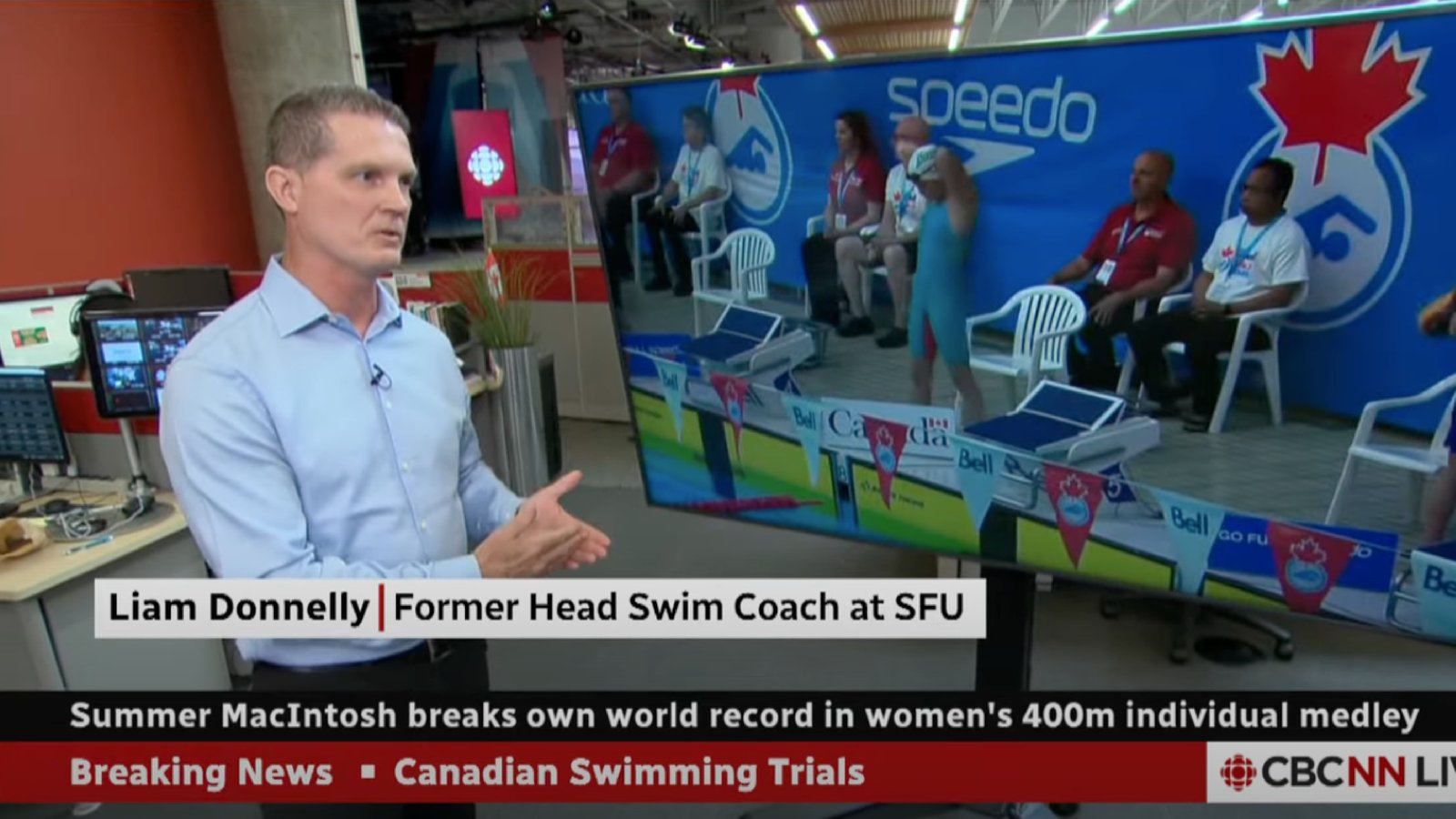
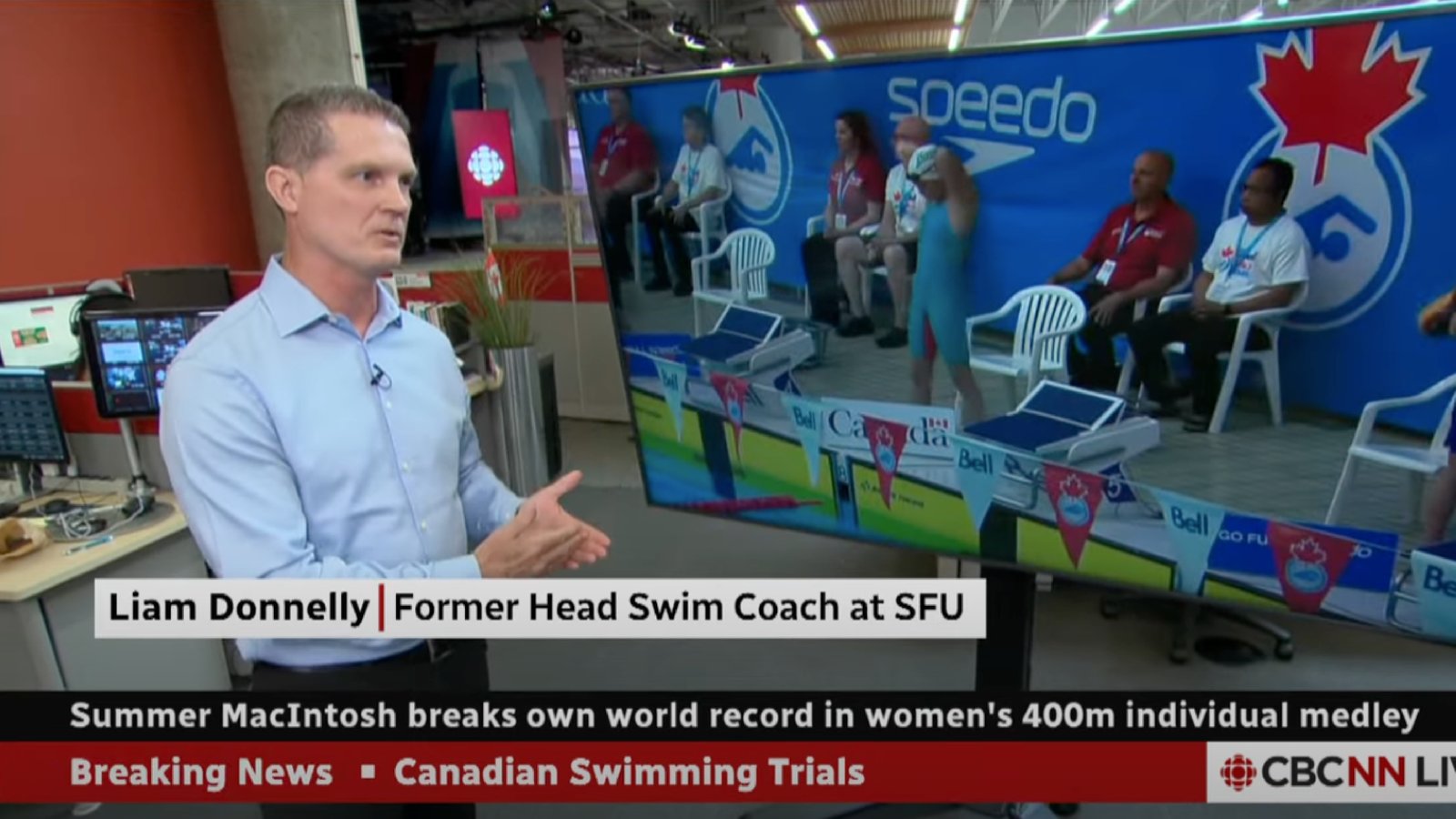
Every family's financial fit is different, and it changes school by school. Liam Donnelly, Streamline Swimming's Director of Swimming, a longtime college coach and former head swim coach at Simon Fraser University, reviews swimmers from both sides of the border.
Create your free swim profile. It is free to submit, and you can request a free consultation with Liam. Want more detail? Book an Advising Session for a written Recruitment Plan that scores each school on academic, athletic, financial, and geographic fit, including a financial fit review.
Do college swimmers get full scholarships? Some do, but most swimming scholarships are partial. NCAA Division II and NAIA teams split about eight full scholarships across the whole roster. Division I schools that opted in to the House settlement can fund up to 30 athletes, but each athletic department sets its own swimming budget.
How many swimming scholarships does NCAA Division I have? Schools that opted in to the House settlement have no scholarship limit, only a roster limit of 30 for men's and 30 for women's swimming and diving. Schools that did not opt in keep the old limits of 9.9 for men and 14 for women.
Do NCAA Division III schools give swimming scholarships? No. Division III schools cannot give athletic scholarships. Swimmers there can receive merit scholarships and need-based aid on the same terms as other students.
Can I combine a swimming scholarship with an academic scholarship? Usually, yes. NCAA Division I and II athletes can combine athletic and academic aid up to the school's cost of attendance. The NAIA exempts some aid to strong students from the team limit, and U SPORTS academic awards generally sit outside the tuition-and-fees AFA cap.
How much can a U SPORTS swimming scholarship be worth? An Athletic Financial Award can cover up to your tuition and compulsory fees for the year. Each university decides how much money its swim team has, and the coach decides how it is split.
Do I need an 80% average for a U SPORTS athletic scholarship? Not anymore. Since 2024-25, entering students who are admitted and enrolled in degree-granting courses are eligible for an AFA. Continuing students must meet academic standing requirements to keep receiving awards.
Create a free swim profile, and we'll reach out when programs in our network could be a fit. Free to submit.