Levels & standards
A guide for Canadian high school swimmers and parents deciding between university swimming at home and college swimming in the US: how U SPORTS, NCAA and NAIA seasons and scholarships work, why yards and meters matter to coaches, what eligibility requires, and how to decide using academic, athletic, financial and geographic fit.
This guide is for Canadian swimmers and their parents, weighing U SPORTS at home against NCAA and NAIA swimming in the US.
Choose the school where you fit academically, athletically, financially, and geographically, then let the country follow. U SPORTS in Canada is often the most predictable lane, with one national championship, athletic awards capped at tuition and compulsory fees, and a college season swum in the same short course meters pool most Canadian clubs train in. The US offers more programs and larger scholarships at the top end, but aid varies widely by division and school, so call one option cheaper only once the numbers for your family show it.
| Canada (U SPORTS) | US (NCAA and NAIA) | |
|---|---|---|
| Divisions | One national association | NCAA Division I, II, and III; NAIA |
| College season pool | Short course meters (SCM) | Short course yards (SCY) |
| National championship | Early March (short course meters in 2025 and 2026) | March, one meet per division |
| Athletic aid | Athletic Financial Awards, capped at tuition and compulsory fees | D1 varies by school; D2 and NAIA have team limits; D3 offers none |
| Academic eligibility | Admitted and enrolled in at least three degree-credit courses per term | NCAA or NAIA Eligibility Center certification |
| Years to compete | Five academic years | NCAA D1 and D2: up to five years within a five-year window. D3 and NAIA: four seasons. |
| Academic year | Typically September to April | Typically late August to May |
The U SPORTS season starts in the fall and builds to the national championship in early March. The 2026 U SPORTS Swimming Championships were held March 12 to 14 at the Markham Pan Am Centre. The 2027 championships are March 4 to 6 at the University of Calgary's MNP Community and Sport Centre.
The championship format matters for swimmers with national team goals. Swimming Canada has confirmed that the 2025 and 2026 U SPORTS Championships are swum as short course prelims and finals, and it created a short course Trials standard so university swimmers can qualify for Canadian Swimming Trials directly from that meet. That lets a student-athlete finish the semester and peak for Trials in June instead of chasing a long course qualifying swim in April during exams. The announcement covered 2025 and 2026 only, so check the 2027 format with Swimming Canada or your coach before you plan a season around it.
Athletic Financial Awards (AFAs) are Canada's athletic scholarships. An AFA can cover up to tuition and compulsory fees for the academic year, and some universities and conferences set a lower cap. Academic awards and awards from sport governing bodies or governments sit outside that cap. Since 2024, an entering student-athlete can receive an AFA once admitted and enrolled in degree-granting courses, replacing the old 80% entering average rule. An AFA stays with the school, so it does not transfer with you.
US college swimming also starts in the fall and ends with national championships in March, raced in a 25-yard pool. The NCAA Division I qualifying standards are published for the 25-yard course. Upcoming NCAA championships include Division II on March 9 to 13, 2027 in Indianapolis, Division III on March 17 to 20, 2027 in Greensboro, and Division I in Austin (women March 17 to 20, men March 24 to 27, 2027). The 2026 NAIA championship was held March 4 to 7 in Elkhart, Indiana.
Since July 1, 2025, Division I schools that opted into the House v. NCAA settlement no longer have sport-specific scholarship limits. They have roster limits instead, set at 30 for men's and for women's swimming and diving, and they may offer scholarships to anyone on that roster. The NCAA describes Division I scholarships as multiyear and able to reach full cost of attendance. Permission to fund a full roster is different from a budget to fund one, so every program's offer looks different. Schools that did not opt in keep the 2024-25 limits of 9.9 scholarship equivalencies for men's and 14 for women's swimming and diving, with no roster limit.
Division II allows 8.1 scholarship equivalencies per team for men and for women, usually split into partial awards across the roster.
Division III offers no athletic scholarships. The NCAA reports that 80% of Division III athletes receive nonathletic aid, such as academic or need-based awards.
NAIA schools can award up to 8 full-grant equivalencies per team in swimming and diving, and coaches can divide them among swimmers. Most institutional aid, including academic scholarships, counts toward that limit unless the swimmer qualifies for NAIA's academic exemption.
Swimming uses three courses. Short course yards (SCY) is a 25-yard pool. Short course meters (SCM) is a 25-meter pool. Long course meters (LCM) is a 50-meter pool, the Olympic distance.
A yard is shorter than a meter, and a short course race has more turns and push-offs than a long course race. The same swimmer on the same day will post three different times in three courses. Many Canadian clubs race mostly SCM in the fall and winter and LCM in the spring and summer, though meet schedules vary by club and province. US high school and college swimmers race mostly in yards.
Coaches judge times by the standards they know. An NCAA coach compares you to yards times from their conference meet and the NCAA qualifying standards. A U SPORTS coach reads SCM times. Conversion tables give estimates, and USA Swimming does not treat a converted time as an official one.
Three habits help here:
Canadian universities typically hold classes from early September to April, with exams in April. US colleges typically start in late August and finish in May. Check each school's official calendar.
U SPORTS nationals in early March land before April exams. NCAA and NAIA championships fall mid-term, and US freshmen usually start training a week or two earlier. Application deadlines differ too, so put every school's deadline on one calendar early in grade 12.
Compare net cost, the price after every scholarship and grant, and never compare sticker price to sticker price.
In Canada, a domestic student pays domestic tuition, and an AFA can cover up to tuition and compulsory fees. Housing, food, travel, and books stay with the family unless other awards cover them.
In the US, a Canadian usually pays the international or nonresident rate at a public university, and private schools publish one price for everyone. US offers can combine athletic aid, academic scholarships, and need-based grants, and the total varies widely between schools in the same division. Canadian citizens studying in the US on a student visa cannot receive US federal student aid, such as Pell Grants. Dual US citizens and US permanent residents are the main exceptions.
Exchange rates add a second layer. US costs are billed in US dollars, so a weaker Canadian dollar raises the cost of every US dollar owed. Rates move over four years. Convert every offer into one currency, use a rate you are comfortable with, and build in a cushion.
Canada is often the most predictable lane. It is the cheaper one only when the net cost for your swimmer, in one currency and over four years, shows it.
Swimmers heading to Division I or II register for an Academic and Athletics Certification account at eligibilitycenter.org. International students enrolling at a Division III school register for an Athletics Certification account for amateurism review. Division I requires 16 NCAA-approved core courses and a minimum 2.3 core-course GPA, and Division II requires a 2.2. Test scores are no longer part of NCAA initial eligibility, though some schools still use them for admission or scholarships. The NCAA's international guide lists course requirements by province, and students from Quebec use the international contact channel. Divisions I and II now use an age-based eligibility model: up to five years of competition in a five-year window that starts when you first enroll full time in college or at the start of the academic year after your 19th birthday, whichever comes first. Division II states that enrollment outside the US, including at a Canadian university, starts the clock. Division II applies it from 2026-27. Division I applies it to students first enrolling in fall 2027 or later, and 2026 entrants get whichever of the old and new rules works out better. If you might start in Canada and transfer later, ask the NCAA school's compliance office how your first year counts.
A first-year student is eligible with a final high school GPA of 2.3 or higher, or by meeting two of three standards: a minimum 18 ACT or 970 SAT, a minimum 2.0 overall high school GPA, and graduation in the top half of the class. Canadian students pay the US registration fee. NAIA athletes get four seasons of competition and there is no age limit.
You must be admitted to the university and enrolled in degree-granting courses. To compete in a term, you need at least three degree courses (nine credit hours or equivalent). You get five academic years of eligibility. Seasons at an NCAA or NAIA school count toward your five years, and using all of your NCAA eligibility ends U SPORTS eligibility. From 2026-27, first- and second-year students can transfer between U SPORTS schools without sitting out, and swimming already had a transfer exemption.
Build one list with schools from both countries and score each school on the same four areas.
Does the school offer your program, and would you choose it without swimming? Look at class size, co-op options, and where the degree leads.
Where would your current times place at that school's conference championship? A swimmer who scores points and makes finals is valuable to a coach, and that value shows up in the offer. Look at the training group, the coach, access to long course water, and whether the program supports your national team goals.
Put every offer in one currency, over four years, after all aid. Ask how scholarships are renewed and what happens if you are injured.
Count flights home, time zones, weather, and distance from family, plus study permits and health insurance.
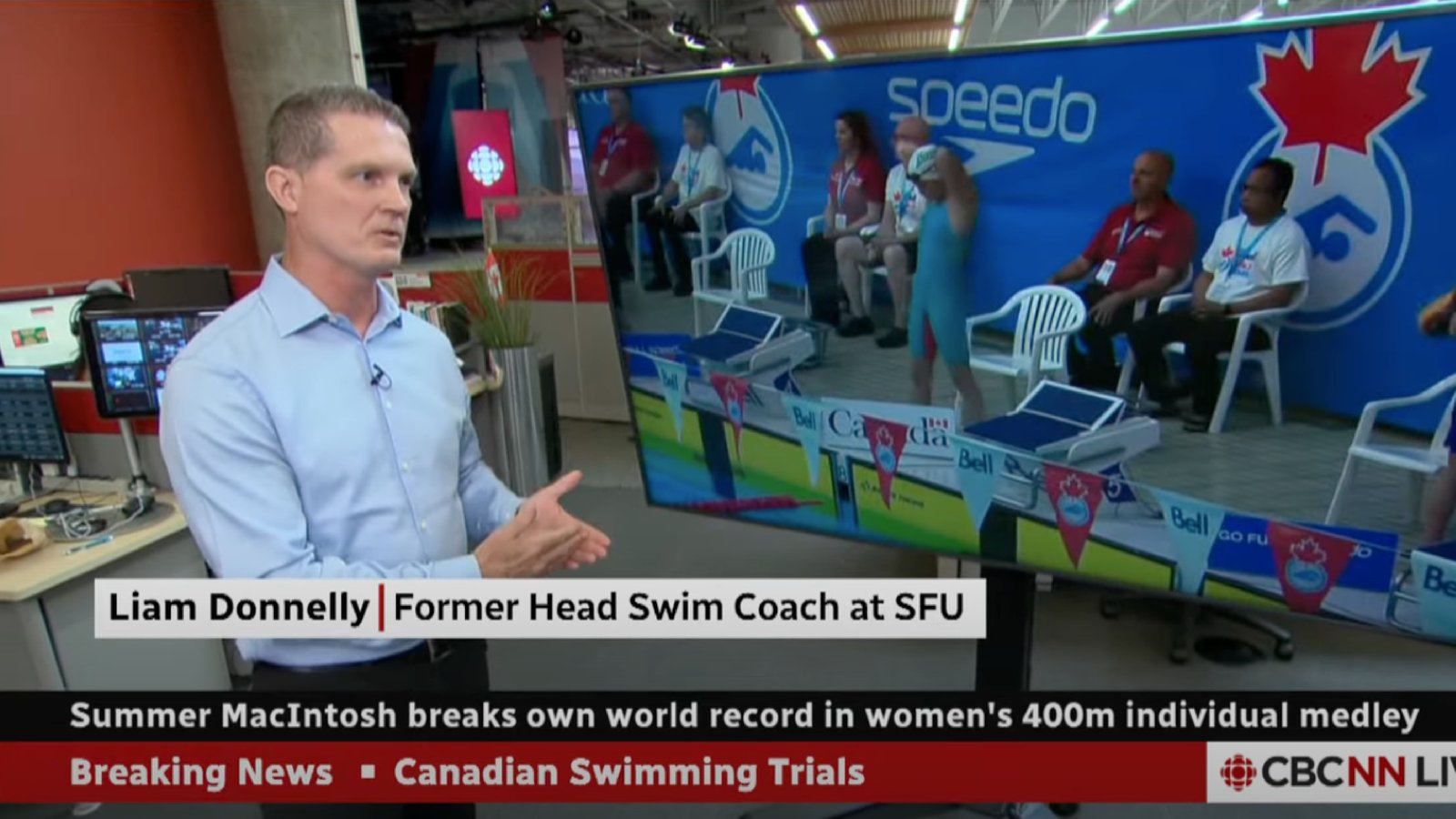
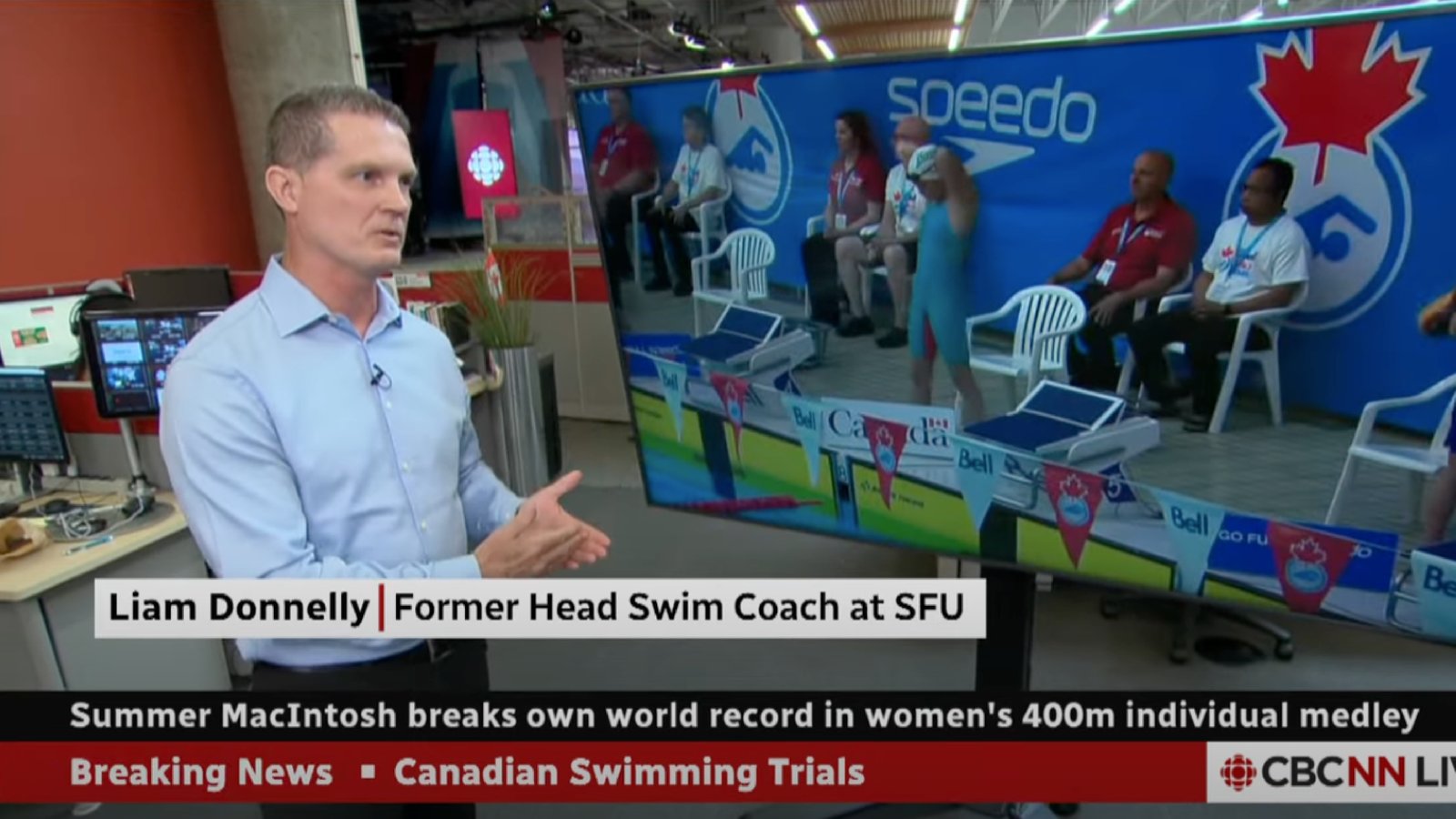
Liam Donnelly, Streamline Swimming's Director of Swimming, a longtime college coach and former head swim coach at Simon Fraser University, works through this same four-area comparison with Canadian families weighing both countries.
Create your free swim profile. It is free to submit. If you want a written plan, book an Advising Session for a Recruitment Plan that compares your options in Canada and the US side by side.
Yes. NCAA Division I and II and NAIA schools can offer athletic aid to Canadian swimmers. Division III schools offer academic and need-based aid only.
An Athletic Financial Award can cover up to tuition and compulsory fees for the academic year. Some schools and conferences set a lower cap, and academic awards sit outside it.
They read them, but they judge you by yards standards. Label every time with its course and send it as swum. A yards meet before senior season gives coaches a direct comparison.
It depends on the offer. Canadian costs are often more predictable, but a strong US package can cost less. Compare net cost after all aid, in one currency, over four years.
Yes, for Division I and II. International students going to Division III register for an Athletics Certification account. For NAIA schools, register with the NAIA Eligibility Center.
Create a free swim profile, and we'll reach out when programs in our network could be a fit. Free to submit.